

 Vaughan Company explains how variable mixing enhances energy efficiency, biological contact, and process consistency in wastewater treatment
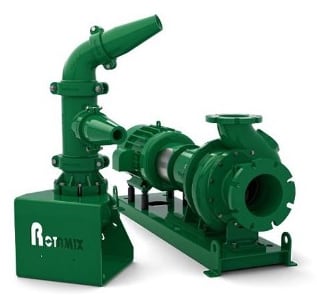
3D image – mechanical mixing components, double nozzle and chopper pump.
Reducing energy consumption is a global priority, especially in energy intensive industries like wastewater treatment, where power often represents the largest operational expense. As facilities strive for net zero energy use, enhancing the efficiency of core processes – such as anaerobic digestion – has become critical. One key tool in this effort is the variable frequency drive (VFD), which allows for precise control of motor speed, enabling facilities to optimize performance while minimizing energy use.
Anaerobic digesters and energy recovery
Anaerobic digesters, especially the continuously stirred tank reactor (CSTR) type, are standard in larger treatment facilities. These systems use microbial processes to break down organic material in the absence of oxygen, generating biogas – a valuable byproduct that can power boilers or cogeneration systems.
Maximizing biogas production enhances energy recovery, potentially allowing advanced facilities to offset their total energy consumption. Achieving this depends heavily on effective mixing, which ensures uniform temperature and pH, better microbial contact, and dilution of inhibitory compounds. It also prevents solids from settling, which can reduce digester capacity and increase maintenance costs.
The role of hydraulic mixing and VFDs
Hydraulic mixing systems, often powered by chopper pumps and nozzle assemblies, are commonly used in anaerobic digesters to provide even energy distribution. These systems are particularly suited for VFD integration, which enables operators to adjust pump speed and control mixing intensity in real time.
In a typical 1-million-gallon digester, varying flow with a VFD directly influences energy transfer to the fluid. As shown in performance data, increasing mixing energy initially improves digester performance, but eventually, returns diminish and efficiency drops. Overmixing can even reduce performance due to foaming or bulking. Therefore, most digesters achieve optimal performance at a mixing energy range of 4–9 w/m3, where volatile solids reduction is maximized per unit of energy used.

Overhead/inside digester mixing tank, double nozzles and a foambuster.
Smart mixing = big savings
Maintaining high mixing energy 24/7 is not necessary. For example, operating at full speed may only be required a few hours a day to resuspend solids; the rest of the time, lower energy levels can maintain digestion stability. This creates a prime opportunity for energy savings without sacrificing performance.
Consider a digester operating with a mixing system at 60 Hz (46.8 hp). If a VFD allows the system to run at 45 Hz (19.8 hp) for most of the day, with just two hours at full speed, the average power use drops to 22.1 hp – a 53% reduction. With electricity priced at US$0.10/kWh, this can translate to over US$16,100 in annual savings.
VFDs are not only effective in digesters. Any process that requires variable mixing energy – such as batch tanks with changing fluid conditions or equalization tanks with fluctuating levels – can benefit. As VFDs become more cost effective and widely available, their application across wastewater treatment processes continues to grow.
A smarter way to mix
The integration of VFDs allows wastewater treatment plants to strike a balance between performance and efficiency. Facilities no longer need to compromise mixing effectiveness to reduce costs. Instead, variable-speed operation ensures optimal conditions for digestion while significantly lowering energy use.
In today’s cost- and sustainability-conscious environment, adopting VFDs is a strategic investment. By tailoring mixing intensity to process needs, treatment plants can enhance digester performance, extend equipment life, and move closer to net zero energy goals – all while reducing their bottom line.
About the author
This article was written by Erik Larson, PE, senior process engineer at Vaughan Company.