

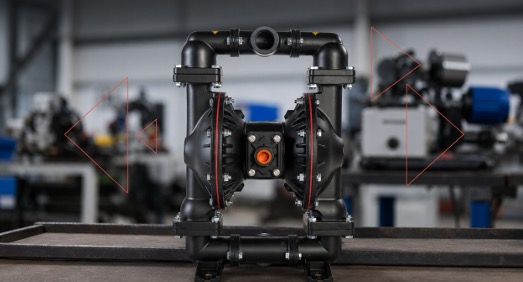
When an Air-Operated Double Diaphragm (AODD) pump stops functioning—whether it stalls completely, cycles without pumping fluid, or fails to build pressure—the issue is typically caused by a blockage, insufficient air supply, or worn internal components.
Here are the top 5 most common reasons for AODD pump failure:
1. Insufficient Air Supply or Blocked Air Line
AODD pumps depend on a steady supply of compressed air to operate. Even if your pressure gauge reads adequate PSI, the system may not be delivering enough air volume (CFM).
The Cause: Undersized air hoses, clogged filters, or dirty exhaust mufflers restrict airflow and starve the pump of power.
The Fix: Use air hoses that match the size of the pump’s air inlet port. Regularly clean or replace the exhaust muffler to avoid backpressure buildup.
2. Ruptured or Weakened Diaphragms
The diaphragm is the most critical and heavily stressed wear part in the pump.
The Cause: Over-pressurization, abrasive materials, or chemically incompatible fluids can cause the diaphragm to degrade, crack, or tear. A ruptured diaphragm often results in fluid leaking from the air exhaust port.
The Fix: Replace the damaged diaphragm immediately and confirm that the pump’s diaphragm material is chemically compatible with the fluid being pumped.
3. Clogged, Blocked, or Collapsed Piping
If the pump is running but not moving fluid on either the suction or discharge side, the flow path is likely obstructed.
The Cause: Closed valves, clogged strainers, kinked hoses, or collapsed lines prevent proper fluid movement.
The Fix: Check both suction and discharge lines for blockages or restrictions. Ensure all piping and hoses are at least the same diameter as the pump’s port connections.
4. Worn Check Valves and Seats
Check balls and valve seats are responsible for directing fluid flow in the correct direction.
The Cause: Abrasive particles or constant wear can cause the balls and seats to erode, swell, or stick, allowing fluid to flow backward instead of forward.
The Fix: Disassemble the wet end of the pump, inspect the check valves for wear or debris, and replace any damaged components.
5. Malfunctioning Air Distribution System
The internal air valve (or pilot valve) controls the shifting of air between the two diaphragms.
The Cause: Dirt, lack of lubrication, or moisture in the air supply (which can cause icing in cold conditions) can make the air spool valve stick. A sticking valve often causes the pump to stall mid-cycle or fail to cycle at all.
The Fix: Clean and lubricate the air valve assembly with a suitable air tool lubricant. Always use clean, dry compressed air to prevent internal contamination and freezing.
For detailed step-by-step instructions on testing air pressure and diagnosing air-side performance issues with your pump contact Monitor Pumps & Systems today!